
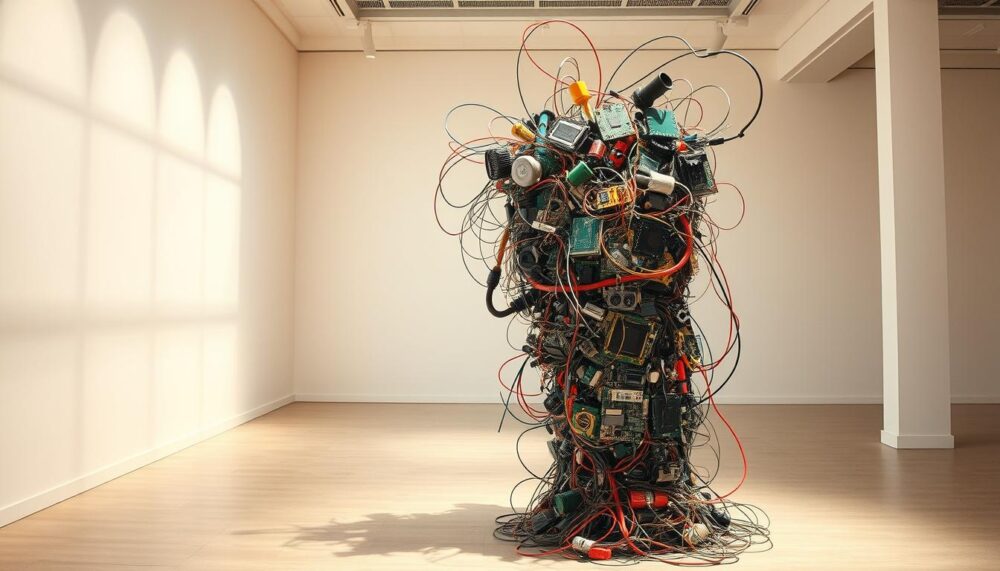
Fact: each year the U.S. discards millions of devices, and much of that e-waste contains lead, mercury, and cadmium that can harm soil and water.
This piece shows how creative hands and simple tools can change the story. Artists in Bangalore, Beijing, and Accra repurpose old computers, phones, keyboards, and cables into sculptures, jewelry, and useful pieces. The results spark conversation and reduce landfill burden.
Within this guide you’ll find a friendly roadmap: what e-waste art means, who’s making it, and how you can start safe, beginner projects at home. We preview handling, ethical sourcing, and basic tools so first-time creators build with confidence.
Why it matters: small projects add up. Creative reuse boosts sustainability, raises awareness, and makes the future feel more circular and less disposable. Bookmark www.TechArtMuse.com for galleries, tutorials, and U.S.-focused resources to begin your first project today.
Key Takeaways
- Electronic waste poses real health and environmental risks if not handled properly.
- Artists worldwide transform discarded gear into conversation-starting pieces.
- Beginner-friendly guides cover safety, sourcing, and simple tools.
- Projects combine creativity with sustainability and public awareness.
- Small, local actions can reduce landfill burden and shape a circular future.
Why E‑waste Is a Growing Problem in the United States and Beyond
Rapid upgrades and short device lifespans are fueling a steady climb in electronic waste. Manufacturers push new features and consumers replace gear faster than recycling systems can adapt.
Hazardous materials in discarded phones, monitors, and circuit boards can leach lead, mercury, and cadmium into soil and water. That environmental impact harms ecosystems and raises public health concerns.
The sheer amount electronic waste creates policy and logistics headaches for cities. Municipal recycling programs struggle with collection, safe processing, and responsible end‑of‑life recovery.
“Small actions—like proper drop‑off or mindful buying—add up and protect communities.”
- Short device cycles drive rising volumes in the U.S. and across the world.
- Informal dumping or incineration increases toxic emissions and health risks.
- Artists and makers reuse materials to divert waste, but creative reuse is not a complete solution.
For U.S.-focused guides on safe drop‑offs and simple upcycling options, visit www.TechArtMuse.com.
What “Turning Recycled Electronics to Art” Really Means
Artists and hobbyists harvest parts from discarded devices and use them as raw material for creative projects. e-waste art refers to the creative reuse of old electronic devices and components to make visually compelling pieces.
Outcomes fall into three clear groups: decorative, functional, and wearable. Decorative work focuses on murals and sculptures. Functional pieces include furniture or lamps. Wearables become jewelry or accessories. Each path needs different tools, skill levels, and time.
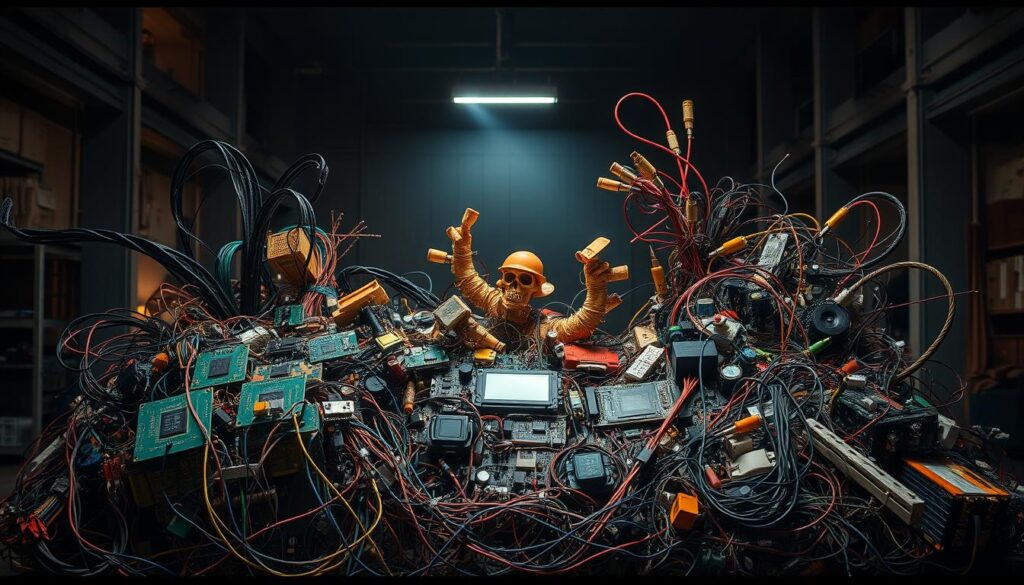
Technology materials—boards, chips, and wiring—add texture, pattern, and storytelling to finished pieces. What was once waste becomes design assets that lift interiors, galleries, and public spaces.
- Awareness: finished pieces spark conversations about responsible disposal.
- Accessibility: many starter projects use basic tools and beginner skills.
- Goals: pick projects for expression, gifting, education, or shows.
| Project Type | Tools Needed | Time & Skill |
|---|---|---|
| Decorative (murals, wall art) | Glue, pliers, basic soldering | Low–Medium time, beginner to intermediate |
| Functional (lamps, furniture) | Soldering iron, drill, safety gear | Medium–High time, intermediate skills |
| Wearable (jewelry, pins) | Fine pliers, resin, adhesives | Low time, beginner friendly |
For a simple checklist and starter kits, visit www.TechArtMuse.com to match your materials and scope before you begin.
Core Benefits: Creativity, Community, and Sustainability
Using discarded parts in group projects sparks new forms of creativity and civic engagement. Creativity grows when makers combine unusual textures, bright circuit patterns, and unexpected shapes that standard supplies rarely offer.
Local cleanups become sourcing events that build real community bonds and raise public awareness. Neighbors swap pieces, share tools, and plan collaborative builds that highlight collective impact.

Diverting components from landfill models a circular way to extend material life and boost sustainability. Projects can even offset costs when donated parts fund workshops or school displays.
- Low-cost entry: free materials mean more people can try making and learn new skills.
- Personal growth: complex builds teach problem-solving, design thinking, and confidence.
- Public change: exhibits and school programs make waste visible and inspire action.
- Shared spaces: regular hack nights let participants co-create installations for parks and libraries.
Find ready-made templates, workshop agendas, and class slide decks at www.TechArtMuse.com to start a community project or school program that brings life, learning, and lasting change.
Safety First: Handling Electronic Components Responsibly
Before you cut or unscrew anything, set up a safe workspace and put on proper protection. Small devices and boards can hold dust and residues that pose a risk if inhaled or touched.
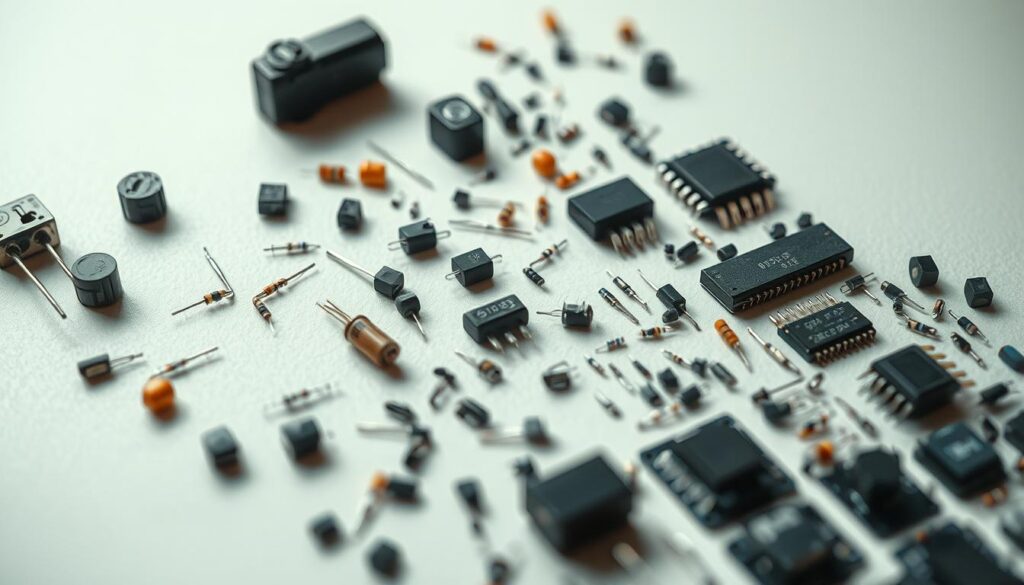
Protective basics: wear gloves, eye protection, and a dust mask when cutting, sanding, or stripping wires and boards. Work on a clean, well‑ventilated surface and keep brittle or sharp parts in a separate container.
Watch for swollen batteries, leaking capacitors, or damaged power supplies. Exclude these from projects—they can cause fires or release toxic substances that harm the environment and human health.
Safe disassembly steps: unplug devices, fully discharge capacitors, remove batteries first, and label screws and parts to avoid mix‑ups. Recycle unusable remnants promptly so your project does not create more waste.
“Careful handling and proper disposal keep creative reuse from becoming a larger problem.”
Choose visibly clean, intact electronic devices when possible. Use adhesives and finishes that minimize off‑gassing for safe display. A quick pre‑project safety audit and PPE checklist are available at www.TechArtMuse.com.
Sourcing Old Tech Ethically and Legally
Start local and be transparent. Ask neighbors, friends, and family for unwanted items from household drawers. With permission, workplace decommission piles are another legal source of usable parts.
Visit community e‑waste drives and reputable recyclers for steady, lawful streams of components. Use www.TechArtMuse.com to find U.S. collection events, thrift stores, and trusted refurbishers.
Respect donor intent. If a device still works, encourage repair or resale before using parts for projects. Keep clear records and say how donations will be used.
- Ask politely and in writing when possible; keep a simple log of donations.
- Wipe storage and remove personal data before accepting devices.
- Avoid scavenging restricted sites or hazardous dumps; prioritize safe access.
- Partner with local repair shops, makerspaces, schools, and libraries for regular material pipelines.
“Good sourcing protects donors, the community, and the planet.”
Need a template? Find a sourcing form and a donor thank‑you note at www.TechArtMuse.com that outline legal, safe ways to collect technology parts and minimize waste.
Essential Tools and Materials for E‑waste Art
A compact toolkit and smart habits speed up any maker’s workflow and protect material quality.
Must-have hand tools: precision screwdrivers, snips, needle‑nose pliers, wire strippers, and a UL-rated hot glue tool. These handle small fixes and safe joins for most pieces.
Adhesives & finishes: use epoxy or plastic‑bonding adhesives for mixed plastics and metal. Clear coats and sealants protect color and reduce off‑gassing for display works.
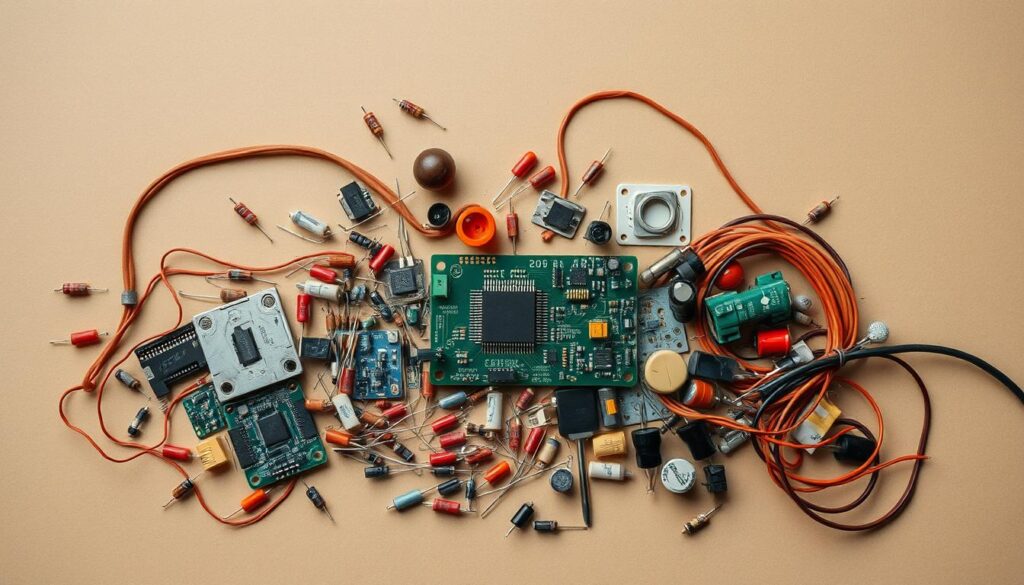
- Organization bins for screws, resistors, and LEDs speed assembly and design iterations.
- Choose soldering for electrical joins; use bolts, rivets, or industrial adhesive for heavier devices and structural joins.
- Cut plastics with a fine saw; score and snap thin sheets. File lightweight metals and sand boards for smooth edges.
- Dry‑fit and tape templates before final assembly to save time and avoid rework.
| Item | Use | Skill Level |
|---|---|---|
| Precision screwdriver set | Disassembly of computer and devices | Beginner |
| Soldering iron & safety kit | Secure LEDs and electronic components | Intermediate |
| Epoxy, clear coat | Bonding and protecting finished works | All levels |
See the beginner and pro toolkits at www.TechArtMuse.com and download a printable shopping list for three budgets.
Techniques and Styles: From Sculptures to Wearables
From wearable pieces to large installations, makers blend craft traditions and found parts in innovative ways.
Start with wall mosaics using keyboard keys, compact discs, and braided cable patterns to make striking pieces. Plan a grid, dry-fit groups by color, and glue in small sections for clean results.
For sculptures, build a simple armature of wire or rebar and layer boards and panels for silhouette and depth. Use modular joins so heavy elements stay stable and repairable.

Wearable frameworks favor lightweight parts and skin-safe finishes. Sand edges, seal with clear coat, and set components on flexible backings for comfort.
Make works interactive by adding LEDs, switches, or motion sensors. Little circuits bring technology into displays and invite touch or motion.
- Compose with contrast: balance color, form, and negative space.
- Sort by color/material, design in modules, then assemble for transport.
- Choose adhesives, rivets, or solder based on load and maintenance.
“Modular design makes exhibitions easier and repairs simpler.”
For tutorials, technique videos, and style lookbooks visit www.TechArtMuse.com. These resources help artists explore e-waste art and rethink waste as material for meaningful art.
Case Study: Vishwanath Davangere Mallabadi’s Colorful Sculptures
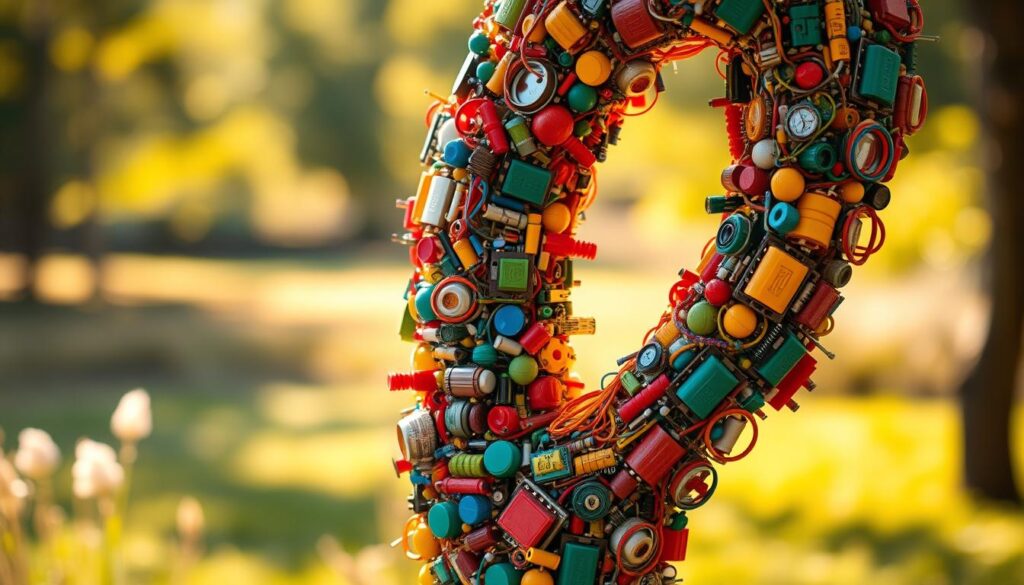
Vishwanath Davangere Mallabadi builds friendly, colorful figures from discarded keyboards, boards, and phones.
His mission blends creativity with technology and makes art accessible for everyone. He sources community donations and uses common parts like a computer board or mobile phone shells.
Material choices favor vivid color blocking and playful contrast. Keyboard keys become scales, chips become eyes, and braided cables add texture.
Vishwanath frames his practice as waste art that changes how people see what others call waste. Creature silhouettes and clear forms make complex parts feel warm and familiar.
- Practical takeaways: bold color blocking, modular builds, and storytelling.
- Use community drives for steady supply and public engagement.
- Adapt simple modules for classroom or community builds.
| Feature | Example | Benefit |
|---|---|---|
| Palette | Keyboard keys and painted boards | High visual impact |
| Form | Creature silhouettes | Immediate public appeal |
| Supply | Donations and local drives | Low cost, community engagement |
“Art should be for the common person,” says Vishwanath.
Explore his gallery and an interview at www.TechArtMuse.com for lesson plans and build guides American makers can adapt.
Case Study: N+ew Seats by Rodrigo Alonso—Functional E‑waste Art
Rodrigo Alonso’s N+ew Seats show how discarded components can become daily, functional design statements.
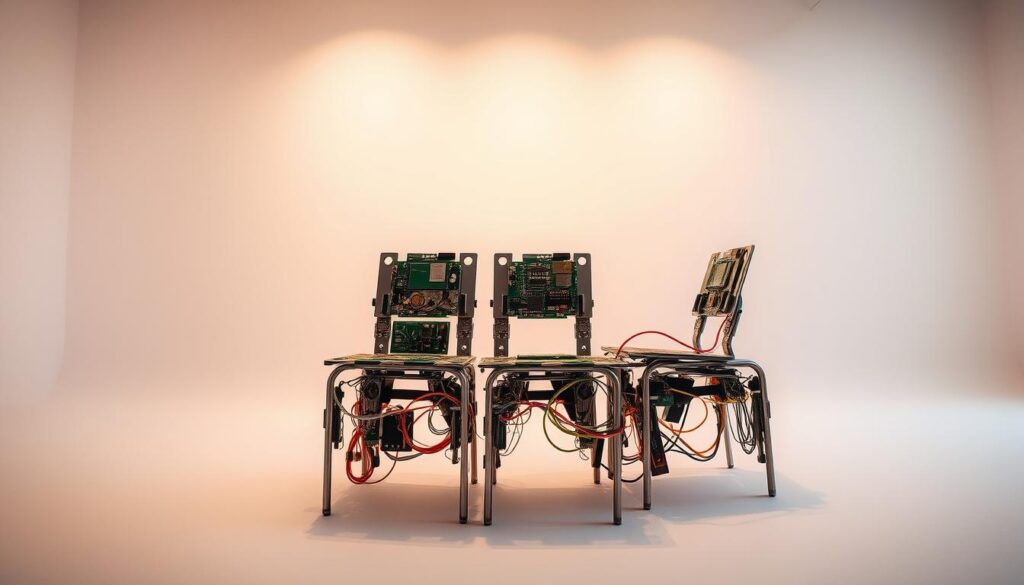
What they are: packed, transparent forms that encase keyboards, CDs, cables, mobile phones, and other devices. The result is durable, eye‑catching seating that gives waste new life while teaching users about material value.
How he packs materials: layer rigid parts for structure, add softer bits for comfort, then pour clear resin in stages to avoid bubbles and shifting.
- Balance structure and comfort with internal foam or plywood bases.
- Seal joins, sand edges, and use a clear UV coat for longevity.
- Test weight loads in controlled steps and document results for safety.
| Material | Role | Packing Tip |
|---|---|---|
| Keyboard keys, phone shells | Surface texture and color | Arrange face-up in shallow layers |
| CDs, circuit boards | Structural contrast | Anchor with epoxy pods before resin |
| Cables, foam | Fill, cushion | Use compressed bundles for even density |
“Functional design gives discarded devices everyday purpose.”
Alonso’s method proves e‑waste art can be more than decorative. It can yield long‑lasting pieces like seats, side tables, and lamps. Find functional build guides and material packing tips at www.TechArtMuse.com.
Case Study: Shen Bolun’s “Mobile Phone Tower of Babel” Installation
On March 30, 2019, Shen Bolun unveiled “Tongtian” in a Beijing shopping center. The piece used a metal frame studded with discarded mobile phones that flashed in synced color patterns. The work ran alongside a Greenpeace campaign about e-waste.

The synchronized screens turned a simple scaffold into a moving public spectacle. Light and motion made the structure feel alive, creating an immediate visual impact that drew crowds and photographers.
The title nods to the Tower of Babel. That biblical image links communication, consumption, and the confusion of mass production. Here, blinking displays become a reminder about our relationship with devices.
Practical notes for makers: use low-voltage LEDs or phone screens driven by safe power supplies. Mount phones to a rigid frame, separate battery hazards, and run wiring through protective conduits. Get permits for public sites and consult a qualified rigger when needed.
| Feature | Why it matters | Practical tip |
|---|---|---|
| Synchronized screens | High visual draw | Use controller boards and timed sequences |
| Public placement | Wide audience reach | Coordinate with mall or campus schedules |
| Safety & permits | Legal and secure displays | Submit plans early; include load tests |
Located in busy spaces, such works efficiently raise awareness about waste. Local makers can scale the idea down for windows or wall pieces and use it as a community project in malls, libraries, or campuses.
“A pile of old phones became a public lesson—beautiful, urgent, and impossible to ignore.”
Watch installation breakdowns and lighting tips at www.TechArtMuse.com and find planning timelines, permit checklists, and safe rigging guides for similar community-driven art.
Case Study: Transforming Ghana’s Agbogbloshie—Joseph Awuah‑Darko
Joseph Awuah‑Darko co‑founded Agbogblo.Shine to reframe a toxic yard as a hub for design and jobs. His team trains local makers, pays fair wages, and produces high‑end furniture from salvaged parts.
The initiative’s first landmark was a grandfather clock built from a galvanized car axle, aluminum panels, and a salvaged wall clock component. That piece drew bids from hotels in Accra and showed how industrial salvage meets refined craftsmanship.
Agbogblo.Shine reframes hazardous material into valuable goods. Local training, fair compensation, and clear recycling pathways create real community buy‑in and lasting change.
- Design workshops teach safe handling and finishing techniques.
- Market links turn clutter into steady income streams.
- Programs track impact electronic waste diversion alongside social outcomes.
U.S. groups can adapt this model with a simple framework: map local sources, run pilot workshops, secure buyers, measure diversion, and iterate. Read community program blueprints and grant templates at www.TechArtMuse.com for a practical start toward a cleaner future.
Case Study: Haribaabu Naatesan’s Large‑Scale Works and Sculptures
When a familiar shape emerges from thousands of scraps, viewers instantly connect with the message. Haribaabu built a life‑size yellow Volkswagen Beetle from 2,805 parts — 800 spark plugs, 200 bottle caps, 60 motherboards, audio cassettes, typewriters, pens, and barbecue sticks.
Material accounting matters. Label every batch, record counts, and map parts by weight and fragility. This makes assembly and transport manageable for large works.
Recognizable forms — cars, birds — help the public grasp scale and meaning fast. Haribaabu’s flamingo street‑light used redundant automobile parts and clear anchor points for safety.
- Plan a steel frame and test weight distribution in sections.
- Mark anchor points and use bolted connections for public displays.
- Use clear coats or unified paint to visually bind many textures.
| Phase | Key Task | Outcome |
|---|---|---|
| Inventory | Count, label, photograph parts | Assembly map and transport packs |
| Structure | Design frame, test load points | Safe, stable public installation |
| Finish | Seal, paint, and UV coat | Unified visual surface |
“Small commissions and steady perseverance can grow into international recognition.”
American artists can pilot mid‑size installations in parks, campuses, and maker fairs. See planning workbooks for permitting, transport, and insurance at www.TechArtMuse.com and imagine local waste streams becoming world-class pieces.
Case Study: Jewelry from E‑waste by Eliza Walter (Lylie’s)
Eliza Walter blends goldsmith craft and mindful sourcing to make jewelry that speaks for sustainability. She founded Lylie’s in 2017 after training as a goldsmith and now salvages precious metals from electronic devices for clear, traceable supply chains.
Lylie’s model invites customers to return unworn items for trade‑in credit. This circular approach supports recycling and gives a second life where precious metal is refined and reused.
Design tips: pair refined metal with small visible board fragments for a modern look. Keep weight low, seal edges with skin‑safe finishes, and test comfort for daily wear.
- Refine: e‑mined metals become fine-grade gold and silver with transparent assays.
- Care: choose verified refiners and labs for quality and chain of custody.
- Story: package each piece with provenance notes that explain environmental and social impact.
“Jewelry is a small piece that can carry big messages about material value and the environment.”
Find ring, pendant, and brooch tutorials and sourcing guides at www.TechArtMuse.com.
Case Study: Wearable Art in Kenya by Cyrus Kabiru
Cyrus Kabiru collects street-found bits and reimagines them as bold, wearable statements.
Kabiru’s ethos is simple: reclaim bottle tops, beads, wire, shiny metals, and even small copper pieces and make them sing. His works range from embellished glasses to full bicycle sculptures that celebrate clean, colorful trash as joyful display.
Eyewear frameworks balance spectacle with comfort. Use padded contact points, rounded edges, and lightweight backings. Secure metal bits with rivets or resin domes so pieces rest safely against skin during long shoots or events.
Color and sheen matter. Bright metals and polished plastics catch light and lift everyday outfits into performance pieces. These visual cues help wearable pieces spark conversations about material life and visible waste in public spaces.
- Translate Kabiru’s methods in U.S. streams: cans, copper wire, small phones parts, and beads.
- Test weight distribution: keep heavy bits near the frame and counterbalance with lighter elements.
- Attachment systems: elastic straps, hidden clamps, and padded mounts work well for comfort and security.
Event value: Wearable works energize shoots, live shows, and exhibits by making sustainability instantly visible. Collaborate with photographers and stylists to document context and story.
“Wearables make sustainability wearable — and impossible to ignore.”
Browse wearable build frameworks and prototyping patterns at www.TechArtMuse.com for step-by-step tips and templates.
Inspiration Board: turning recycled electronics to art at Home
Collecting small bits and simple tools at home can spark a project in an afternoon.
Artists and crafters publish clear tutorials and online communities share quick tips that help you begin. Use this list as a short idea bank for simple, practical projects you can try this weekend.
Quick project ideas:
- Create a cable-wave wall piece by weaving cords into geometric patterns for instant texture.
- Build a keyboard-key mosaic with color-sorted caps arranged into pop-art phrases.
- Frame a circuit board “cityscape” and add LEDs for gentle backlighting.
- Make a headphones-hanger from old device shells mounted on reclaimed wood.
- Turn compact discs into a reflective mosaic planter sleeve or lampshade.
- Craft a shadow-box memory piece featuring your first phone and story cards.
- Assemble magnet sets from small boards and ports for a maker-fridge vibe.
- Host a mini swap with friends to breathe new life into forgotten items and co-create a community mural.
Try one idea and join an online group for step-by-step help. For printable idea cards and starter templates, download free packs at www.TechArtMuse.com.
“Small, shared projects grow creativity and community while reducing household waste.”
How E‑waste Art Raises Awareness and Drives Change
A single installation can make the unseen harms of bad disposal feel immediate and personal.
Exhibits convert abstract data into objects people can touch and discuss. Seeing boards, batteries, and soil samples links household choices with the environmental impact on water and soil.
Schools can build simple, safe displays where students dismantle non‑hazardous parts and assemble installations that raise awareness in their communities. These projects teach repair skills and care for materials, while prompting local action.
Use media tactics—artist talks, QR codes that lead to donation pages, and short videos—to widen reach. Partner with recyclers and environmental groups so viewers can sign up for drop‑offs on the spot.
- Measure success: audience reach, pledges to recycle, and post‑event drop‑off volumes.
- Frame the message: present the problem as a solvable community challenge.
- Run month‑long campaigns with weekly themes: education, action, pledge, and follow‑up.
| Activity | Goal | Metric |
|---|---|---|
| Gallery exhibit | Inform and inspire | Visitor count & pledge signups |
| School build week | Student learning | Student projects & local shows |
| Media push | Amplify message | Video views & QR conversions |
Impact grows when art links to real options for reuse and safe recycling. For turnkey exhibit kits, campaign calendars, and educator resources, visit www.TechArtMuse.com.
“Art that informs makes action easier and more likely.”
Conclusion
Conclusion
Simple projects let you respond to the growing problem of electronic waste with practical creativity. Start with one manageable piece that fits your space, skills, and time. Doing one small project builds momentum and teaches safe habits.
Source materials ethically, handle electronic components with care, and recycle unusable leftovers. Document your process — photos and short videos make a powerful reminder that inspires friends and followers.
Share finished works in local shows, libraries, or online communities to multiply impact. Iterate: begin with a wearable or small sculpture, then scale to furniture or interactive works as confidence grows.
E‑waste art is a fusion of technology and creativity that raises awareness about the impact electronic waste and encourages responsible recycling.
Start today: download the free starter kit, sourcing map, and 30‑day project planner at www.TechArtMuse.com and join a community shaping a cleaner future, one piece at a time.
FAQ
What does transforming recycled tech into unique art involve?
It means giving old devices and components new life as creative pieces—sculptures, jewelry, furniture, and wearables—while highlighting waste and promoting reuse. Artists disassemble phones, computers, and circuit boards, then reassemble parts into expressive works that blend design, commentary, and sustainability.
Why is e‑waste a growing problem in the United States and beyond?
Rapid device turnover, limited repair options, and rising global consumption drive huge volumes of discarded electronics. Many items contain hazardous materials like lead and mercury that can pollute soil and water when mishandled. Recycling rates remain low, and much e‑waste is shipped abroad where informal recycling harms people and ecosystems.
What does “turning recycled electronics to art” really mean?
It’s the process of collecting end‑of‑life gadgets and transforming their parts into artworks that educate and inspire. This practice combines craft, engineering, and storytelling to show value in discarded materials and to question our throwaway culture.
What core benefits come from making art out of e‑waste?
Key benefits include raising environmental awareness, promoting circular economy ideas, creating community projects, and offering artists low‑cost materials. Works can spark conversations about consumption and encourage repair, reuse, and better recycling systems.
How do artists handle electronic components safely?
They use personal protective equipment, ventilated workspaces, and proper disposal for hazardous parts. Training in safe soldering, battery handling, and lead management helps prevent exposure. When in doubt, work with certified e‑waste recyclers for certain materials.
Where can I source old tech ethically and legally?
Look for local e‑waste collection events, donation drives, repair cafes, and certified recyclers. Many manufacturers and retailers offer take‑back programs. Always avoid buying material from informal markets that may exploit workers or bypass safe handling standards.
What essential tools and materials do I need for e‑waste art?
Basic tools include screwdrivers, pliers, a soldering iron, wire cutters, and a multimeter. Materials often come from devices themselves—connectors, screens, keypads, and metal frames—plus adhesives, mounts, and protective coatings for finishing pieces.
What techniques and styles are common in e‑waste art?
Artists use assemblage, mosaics, welded sculpture, mixed‑media collage, and wearable construction. Styles range from polished design objects to raw, statement pieces that emphasize texture and circuitry. Functional art, like furniture or lighting, bridges utility and message.
Who is Vishwanath Davangere Mallabadi and what are his sculptures like?
Vishwanath Davangere Mallabadi is known for colorful sculptures made from salvaged electronic parts. His work highlights form and pattern, turning circuit boards and wires into vibrant, eye‑catching compositions that comment on consumption and renewal.
What is the N+ew Seats project by Rodrigo Alonso?
Rodrigo Alonso’s N+ew Seats repurposes discarded device parts into functional seating and furniture. The project blends industrial design with sustainability, showing how e‑waste can become durable, everyday objects with aesthetic value.
What is Shen Bolun’s “Mobile Phone Tower of Babel” installation?
Shen Bolun assembled hundreds of phones into a towering installation that explores communication overload and technological dependence. The piece uses obsolete handsets to create a visual metaphor about connection, language, and the lifecycle of devices.
How did Joseph Awuah‑Darko transform Ghana’s Agbogbloshie through art?
Joseph Awuah‑Darko founded recycling initiatives that reclaim materials from Agbogbloshie and turn them into marketable goods and artworks. His work helps create safer livelihoods, offers alternatives to informal burning, and raises global awareness about e‑waste impacts.
What are Haribaabu Naatesan’s large‑scale works and sculptures about?
Haribaabu Naatesan creates monumental pieces from salvaged electronics that explore memory, labor, and technological change. His sculptures often combine structural engineering with found components to produce striking public art.
How does Eliza Walter (Lylie’s) make jewelry from e‑waste?
Eliza Walter crafts delicate pieces by extracting aesthetic elements—soldered traces, tiny connectors, and colorful capacitors—and turning them into necklaces, earrings, and brooches. Her work emphasizes beauty in the overlooked parts of devices.
What kind of wearable art does Cyrus Kabiru create in Kenya?
Cyrus Kabiru is known for elaborate eyewear and wearable sculptures assembled from scrap and electronic parts. His pieces blend personal expression with commentary on urban life, recycling, and identity.
How can I set up an inspiration board for making e‑waste art at home?
Collect images, sketches, and small sample parts. Pin color palettes, circuit patterns, and favorite techniques. Note safety steps and local recycling links. An inspiration board keeps ideas focused and helps plan material use responsibly.
How does e‑waste art raise awareness and drive change?
Art makes the hidden impacts of electronic consumption visible. Exhibitions, workshops, and public installations provoke discussion, educate audiences about toxic materials and recycling, and motivate policymakers, designers, and consumers to adopt greener practices.